
Paramedical Course – MGM College of Nursing & Paramedical
The Paramedical course at MGM College of Nursing & Paramedical is designed to prepare students for essential roles in the healthcare system. Paramedical professionals support doctors and nurses in diagnosis, treatment and patient care through specialized technical and clinical skills.
This program focuses on practical medical training, diagnostic techniques, laboratory procedures and patient care support. Students develop the knowledge and skills required to work in hospitals, diagnostic centers, laboratories and various healthcare institutions.
About Paramedical Course
Paramedical courses focus on medical support services that assist doctors and healthcare professionals in diagnosing and treating patients. These courses provide training in medical laboratory technology, emergency care, patient management and healthcare support services.
The program combines theoretical knowledge with practical clinical training in hospitals, laboratories and healthcare institutions. Students gain hands-on experience with modern medical equipment and diagnostic procedures.
Paramedical Course Overview
Course Duration
2 Years – 3 Years (Depending on the specialization)
Eligibility
10+2 with Science (Physics, Chemistry, Biology)
Mode of Study
Full-Time Professional Program
Approval
Recognized by State Health & Medical Education Authorities
Eligibility & Admission Criteria
- Candidate must have completed 10+2 with Science stream.
- Physics, Chemistry and Biology should be compulsory subjects.
- Minimum qualifying marks as per institute or council guidelines.
- Admission may be based on merit or entrance examination.
Documents Required
- 10th Marksheet
- 12th Marksheet
- Aadhar Card / Identity Proof
- Passport Size Photographs
- Transfer Certificate
- Caste Certificate (if applicable)
Paramedical Course Subjects
- Human Anatomy & Physiology
- Medical Laboratory Technology
- Pathology & Microbiology
- Biochemistry
- Clinical Biochemistry
- Diagnostic Techniques
- Emergency Medical Care
- Hospital Management
Practical & Clinical Training
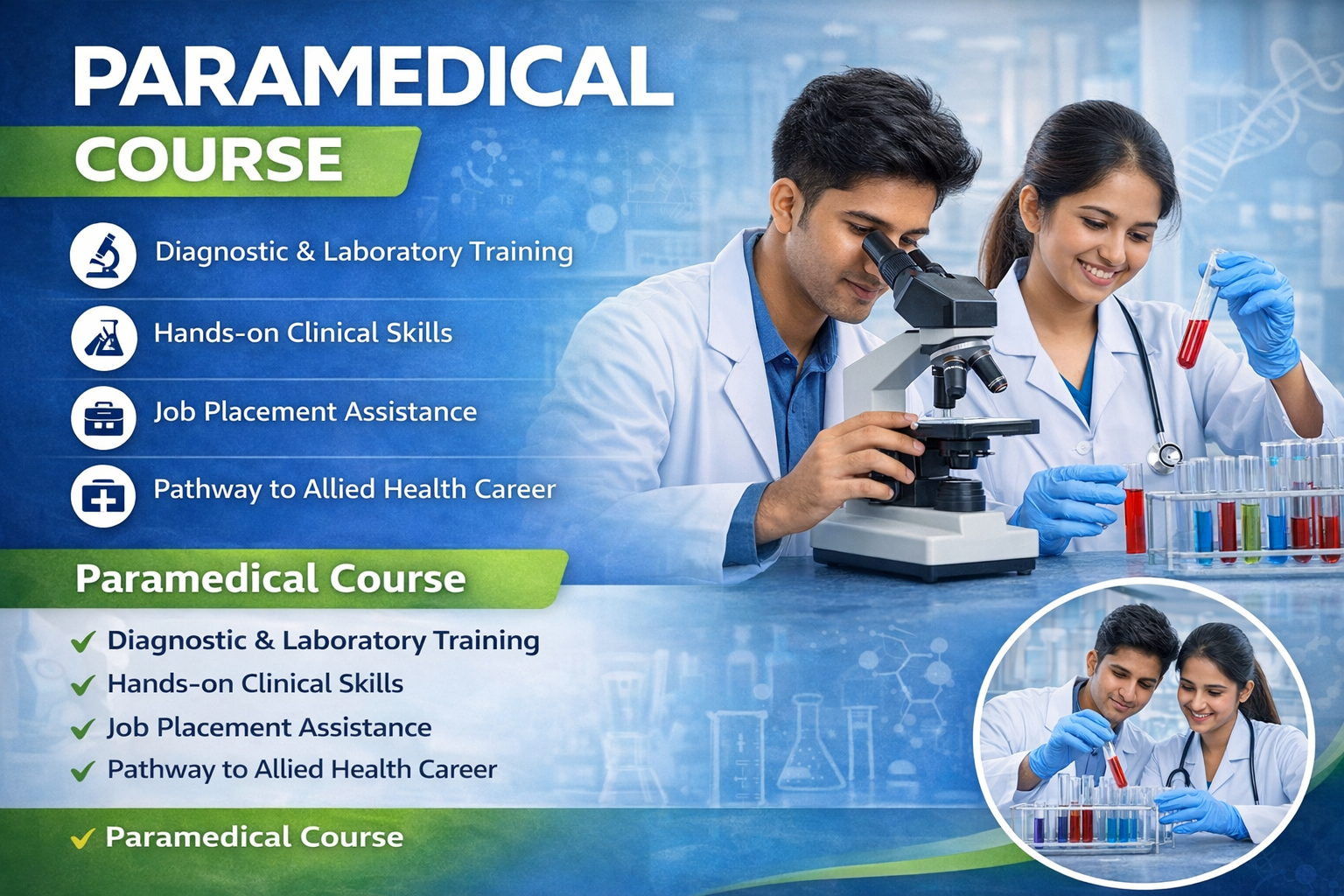
Students receive practical training through clinical exposure in hospitals, diagnostic centers and laboratories. Training includes hands-on experience with medical equipment, diagnostic tests, patient care support and laboratory procedures.
The program helps students develop practical skills required to assist healthcare professionals in patient diagnosis, treatment and emergency care.
Career Opportunities After Paramedical Course
Medical Laboratory Technician
Work in diagnostic laboratories performing medical tests and analysis.
Clinical Assistant
Assist doctors and healthcare professionals in hospitals and clinics.
Hospital Technician
Work in hospital departments handling medical equipment and diagnostics.
Emergency Medical Technician
Provide emergency healthcare support and patient care services.
Higher Studies After Paramedical Course
- Bachelor Degree in Paramedical Sciences
- Specialized Medical Technology Programs
- Healthcare Management Programs
- Advanced Clinical Training Courses
Paramedical Course Highlights
| Highlight | Description |
|---|---|
| Practical Medical Training | Hands-on experience in laboratories and healthcare institutions. |
| Diagnostic Expertise | Training in modern diagnostic and laboratory techniques. |
| Healthcare Support Skills | Develop skills to assist doctors and healthcare professionals. |
| Career Opportunities | Employment in hospitals, labs, clinics and diagnostic centers. |
How To Apply
Admission Procedure for ANM Course
Follow the simple steps below to complete your admission process.
Fill the Application Form
Submit the online or offline application form with accurate personal and academic details.
Submit Required Documents
Provide academic certificates, ID proof, and other necessary documents.
Merit / Entrance Evaluation
Selection is based on merit list or entrance examination performance.
Fee Payment & Confirmation
Complete the admission fee payment to confirm your seat.
Why Choose MGM College of Nursing & Paramedical
Modern Nursing Labs
Well-equipped laboratories that provide practical training for nursing students.
Experienced Faculty
Qualified and experienced nursing educators with strong clinical expertise.
Hospital Based Training
Hands-on clinical training in hospitals and healthcare centers.
Affordable Fee Structure
Reasonable and affordable fee structure for quality nursing education.
Clinical Internship
Students receive practical clinical training and internship experience in hospitals and healthcare centers to develop real-world nursing skills.
Placement Assistance
Guidance and support for job opportunities in hospitals and healthcare institutions.